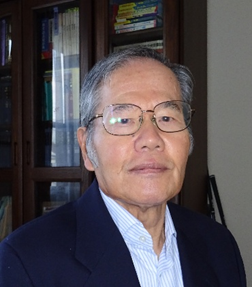
Affiliation Tokyo University of Science
Position Visiting Professor (2023 – today)
Area Gene regulation, Pharmaceutical science
Email shashimoto@rs.tus.ac.jp
Biography
Born: Tokyo, 1940
Occupation: Molecular biologist
Main research interest: Molecular virology, Structure and function of RNA, Gene expression of DNA tumor viruses.
Degree
Bachelor of Science: Agriculture, Tokyo University of Agriculture and Technology, 1963
Master of Science: Chemistry. Kanazawa University Graduate School of Science, 1966
Doctor of Science: Molecular Biology, Nagoya University Graduate School of Science, 1972
Scientific Activities
(1) Structure and function of transfer RNA (1966-1971 at Nagoya University Facuty of Science, Graduate student and Research stuff.)
Outline: Tyrosine transfer RNA was purified from Torulopsis utilis (yeast). Its primary base sequence was determined (T. utilis tRNAtyr). RNA fragments obtained by partial RNase digestion of the tRNAtyr were used to reconstruct incomplete tRNA molecules, and the restoration of their biological activities were examined.
Publication: Research papers in international journals: 8 articles, Reviews and books: 4. articles.
(2) Research on Ribosomal RNA Biosynthesis in Animal Cells (1971-1976 at Tokushima University School of Medicine, Faculty stuff.)
Outline: Animal cells contain hundreds of ribosomal genes per cell. It is unknown whether they all have the same base sequence. We purified ribosomal RNA from mouse liver and hepatoma C3H/He and compared their base sequences. As a new analytical method, we introduced Sanger’s 2D-Homochromatography. Although we were unable to detect clear sequence differences between the two, we did observe subtle differences that may be due to differences in RNA modifications. Publication: Research papers, in International journals; 3 papers, Reviews; 1 paper.
(3) Study of human adenovirus gene expression. (1973-1984 at The Institute for Molecular Virology, St. Louise University School of Medicine, St. Louise, Mo. USA, Post Doctoral Fellow, Assistant Research Professor, Associate Research Professor)
Outline: Studies of transcription start sites have revealed that adenovirus early mRNAs are highly complex, with each mRNA having multiple transcription start sites. Regarding splicing, we revealed that in the adenovirus oncogene region (E1 region), there is an overlapping mRNA, E1a-E1b, which spans two regions, E1a and E1b, and is predicted to have a splicing different from the previously known constitutive splicing.
Publication: Research papers in International journals; 14 papers.
(4) Study of gene functions of human adenoviruses. (1984-2000 at Meiji Institute of Health Science. Odawara Japan, Division Heade, Molecular Biology).
Outline: The research findings here are expected to include some ground breaking findings.: – The human adenovirus E1a gene is expressed in undifferentiated mouse cells, but not in differentiated cells; – The E1a protein induces necroses and apoptosis in human cells, while the E1b-19K protein suppresses necrosis and apoptosis; – The human enteric virus Ad40 can grow in human-derived A549 cells, but requires the expression of E1a-E1b overlapping mRNA accompanied by alternative splicing for the virus growth.
Publication: Research papers in International journals; 12 papers, Reviews; 5 papers.
(5) Separation and purification of bovine colostrum components effective in human immune support. (2005-2007 at Obihiro University of Agriculture and Veterinary Medicine. Obihiro, Japan, Visiting Professor), Report: Annual Repot to research funding support organization.
(6) Research into viral replication mechanisms for drug discovery. (2023-up to now at Tokyo University of Science, Visiting Professor), Publication: Review article on an international virology journal, 1 paper (2026). Commentary article: A series of commentary article on SARS-CoV-2, 4 papers.